
OpenAI model series, o1, marks a turning point in AI development, setting a new standard for how machines approach complex problems. Unlike its predecessors, which excelled in generating fluent language and basic reasoning, the o1 models were designed to think step-by-step, making them significantly better at tackling intricate tasks like coding and advanced mathematics.
What makes the OpenAI model, o1 stand out? It’s not just about size or speed—it’s about their unique ability to process information in a more human-like, logical sequence. This breakthrough promises to reshape what’s possible with AI, pushing the boundaries of accuracy and reliability. Curious about how these models are redefining the future of artificial intelligence? Read on to discover what makes them truly groundbreaking.
What is o1? Decoding the Hype Around the New OpenAI Model
The OpenAI o1 model series, which includes o1-preview and o1-mini, marks a significant evolution in the development of artificial intelligence. Unlike earlier models like GPT-4, which were optimized primarily for language generation and basic reasoning, o1 was designed to handle more complex tasks by simulating human-like step-by-step thinking.This model series was developed to excel in areas where precision and logical reasoning are crucial, such as advanced mathematics, coding, and scientific analysis.
Key Features of OpenAI o1
- Chain-of-Thought Reasoning: A key innovation in the o1 series is its use of chain-of-thought reasoning, which enables the model to think through problems in a sequential manner. This involves processing a series of intermediate steps internally, which helps the model arrive at a more accurate final answer. For instance, when solving a complex math problem, the OpenAI o1 model doesn’t just generate an answer; it systematically works through the formulas and calculations, ensuring a more reliable result.
- Reinforcement Learning with Human Feedback: Unlike earlier models, o1 was trained using reinforcement learning with human feedback (RLHF), which means the model received rewards for generating desired reasoning steps and aligning its outputs with human expectations. This approach not only enhances the model’s ability to perform intricate tasks but also improves its alignment with ethical and safety guidelines. This training methodology allows the model to reason about its own safety protocols and apply them in various contexts, thereby reducing the risk of harmful or biased outputs.
- A New Paradigm in Compute Allocation: The OpenAI o1 model stands out by reallocating computational resources from massive pretraining datasets to the training and inference phases. This shift enhances the model’s complex reasoning abilities.
- Reasoning Tokens: To manage complex reasoning internally, the o1 models use “reasoning tokens". These tokens are processed invisibly to users but play a critical role in allowing the model to think through intricate problems. By using these internal markers, the model can maintain a clear and concise output while still performing sophisticated computations behind the scenes.
- Extended Context Window: The o1 models offer an expanded context window of up to 128,000 tokens. This capability enables the model to handle longer and more complex interactions, retaining much more information within a single session. It’s particularly useful for working with extensive documents or performing detailed code analysis.
- Enhanced Safety and Alignment: Safety and alignment have been significantly improved in the o1 series. The models are better at adhering to safety protocols by reasoning through these rules in real-time, reducing the risk of generating harmful or biased content. This makes them not only more powerful but also safer to use in sensitive applications.
 Source: OpenAI
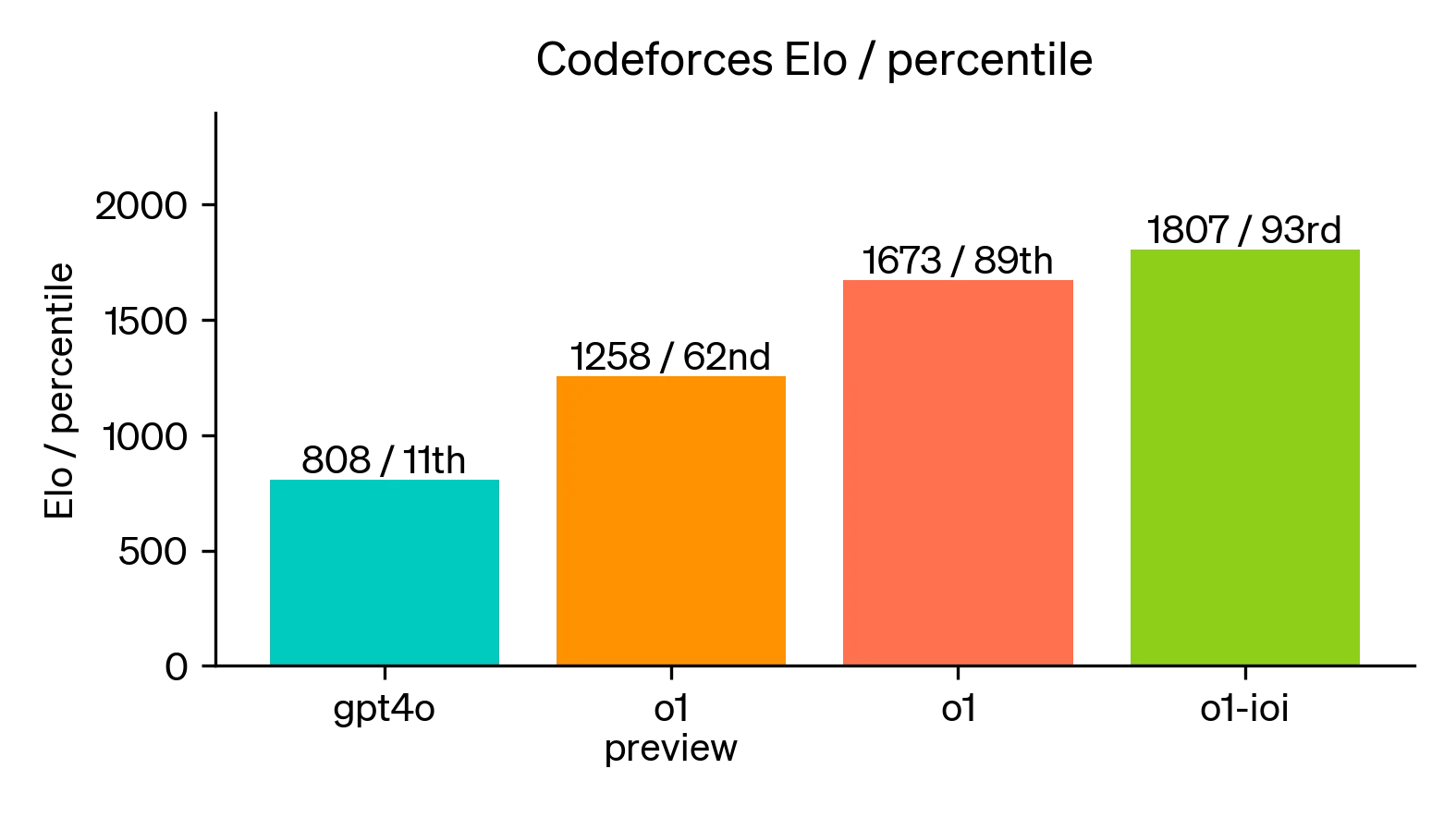
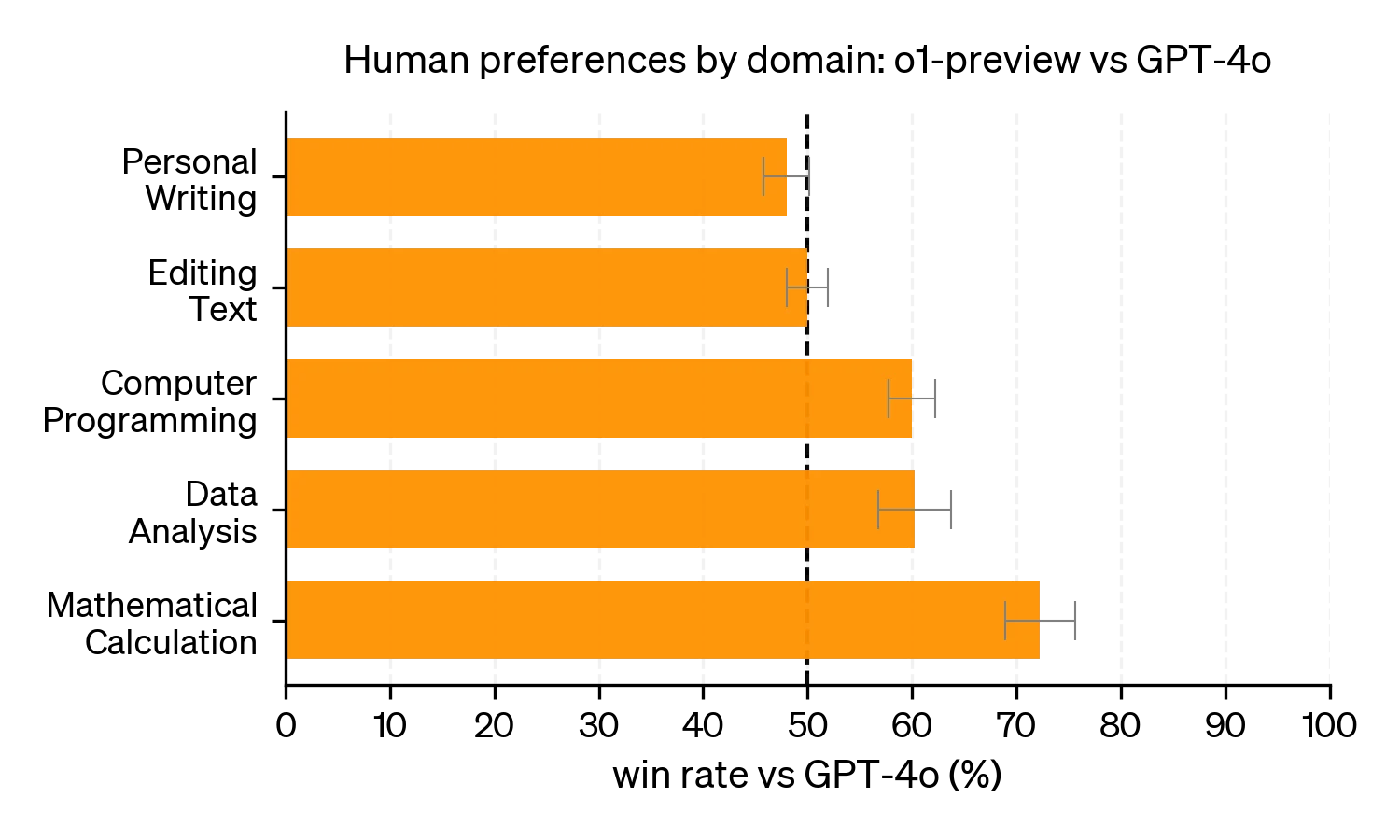
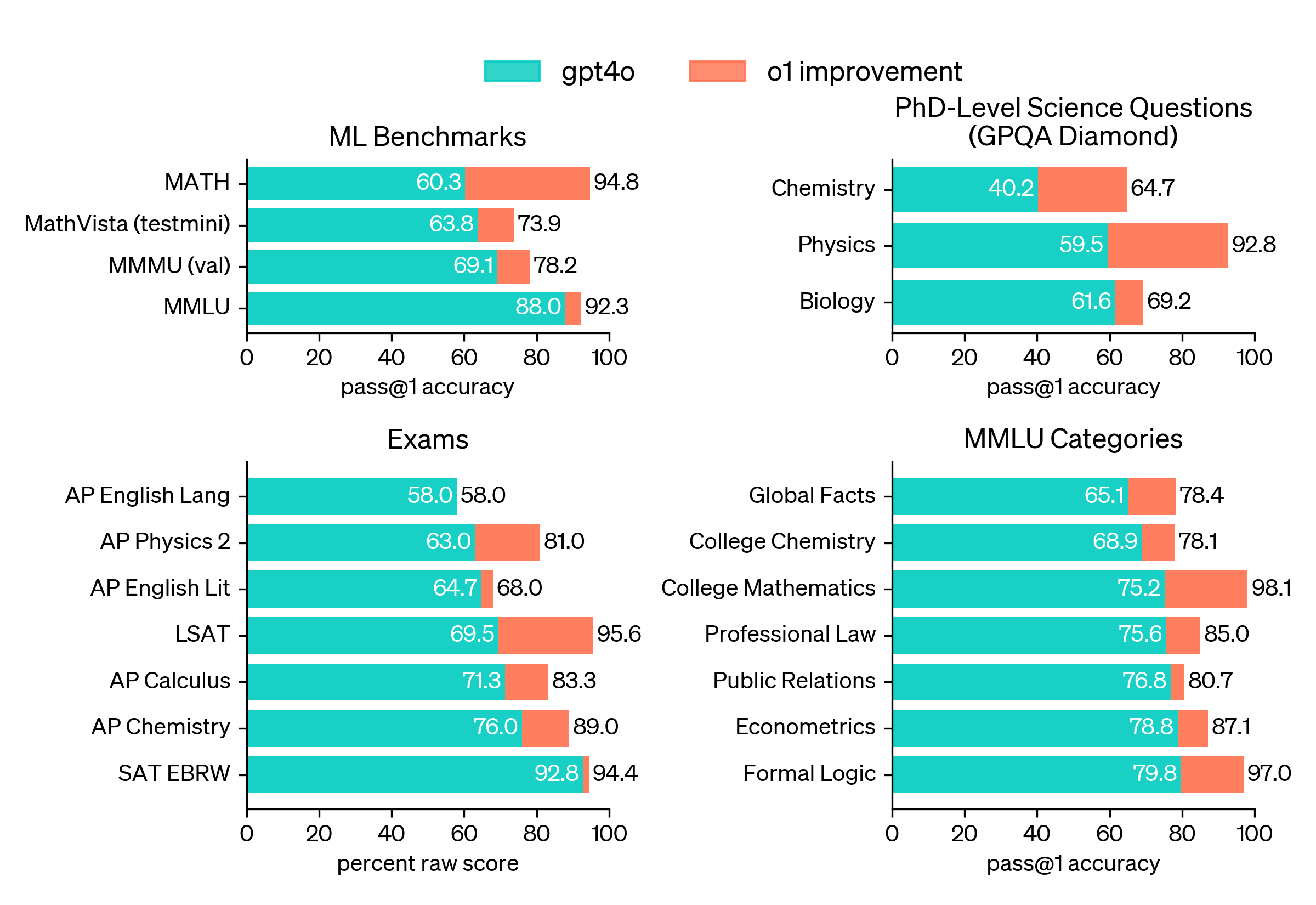
Performance of o1 Vs. GPT-4o; Comparing the Latest OpenAI Models

Want to build AI agents that can reason, plan, and execute autonomously?
Learn more