
Welcome to the world of open source large language models (LLMs), where the future of technology meets community spirit. By breaking down the barriers of proprietary systems, open language models invite developers, researchers, and enthusiasts from around the globe to contribute to, modify, and improve upon the foundational models.
This collaborative spirit not only accelerates advancements in the field but also ensures that the benefits of AI technology are accessible to a broader audience. As we navigate through the intricacies of open-source language models, we’ll uncover the challenges and opportunities that come with adopting an open-source model, the ecosystems that support these endeavors, and the real-world applications that are transforming industries.
Benefits of Open Source LLMs
As soon as ChatGPT was revealed, OpenAI's GPT models quickly rose to prominence. However, businesses began to recognize the high costs associated with closed-source models, questioning the value of investing in large models that lacked specific knowledge about their operations.In response, many opted for smaller open LLMs, utilizing Retriever-And-Generator (RAG) pipelines to integrate their data, achieving comparable or even superior efficiency.
There are several advantages to closed-source large language models worth considering.
-
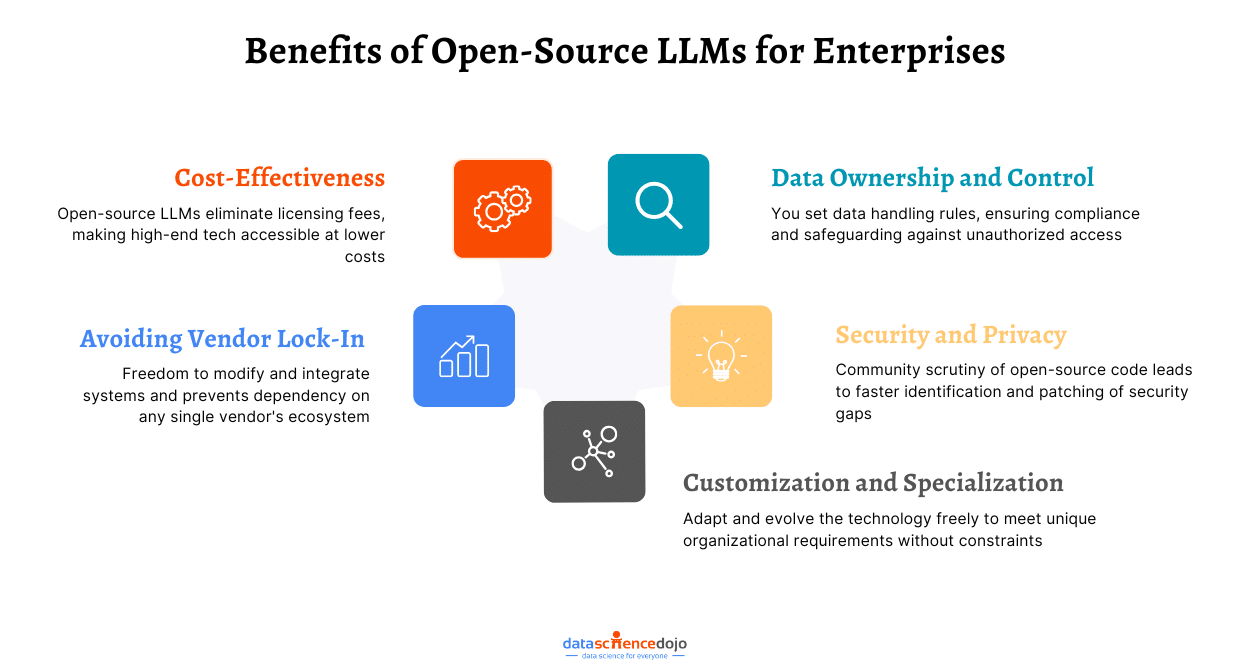
Cost-Effectiveness:
- No licensing fees are required, significantly lowering initial and ongoing expenses.
- Organizations can freely deploy these models, leading to direct cost reductions.
- Open large language models allow for specific customization, enhancing efficiency without the need for vendor-specific customization services.
-
Flexibility:
This flexibility is crucial because a model provider’s unexpected update or failure to keep the model current can negatively affect a company’s operations and customer experience.
Companies often lean towards open language models when they want more control over their data and the ability to fine-tune models for specific tasks using their data, making the model more effective for their unique needs.
-
Data Ownership and Control:
Data hosting control:
- Choice of data hosting on-premises or with trusted cloud providers.
- Crucial for protecting sensitive data and ensuring regulatory compliance.
- Avoids sending sensitive data to external servers.
- Reduces the risk of data breaches and enhances privacy.
- Flexibility to implement data anonymization and encryption.
- Helps comply with data protection laws like GDPR and CCPA.
- The open-source nature allows for code and process audits.
- Ensures alignment with internal and external compliance standards.
Enterprises Using Open Source LLMs
Here are examples of how different companies around the globe have started leveraging open language models.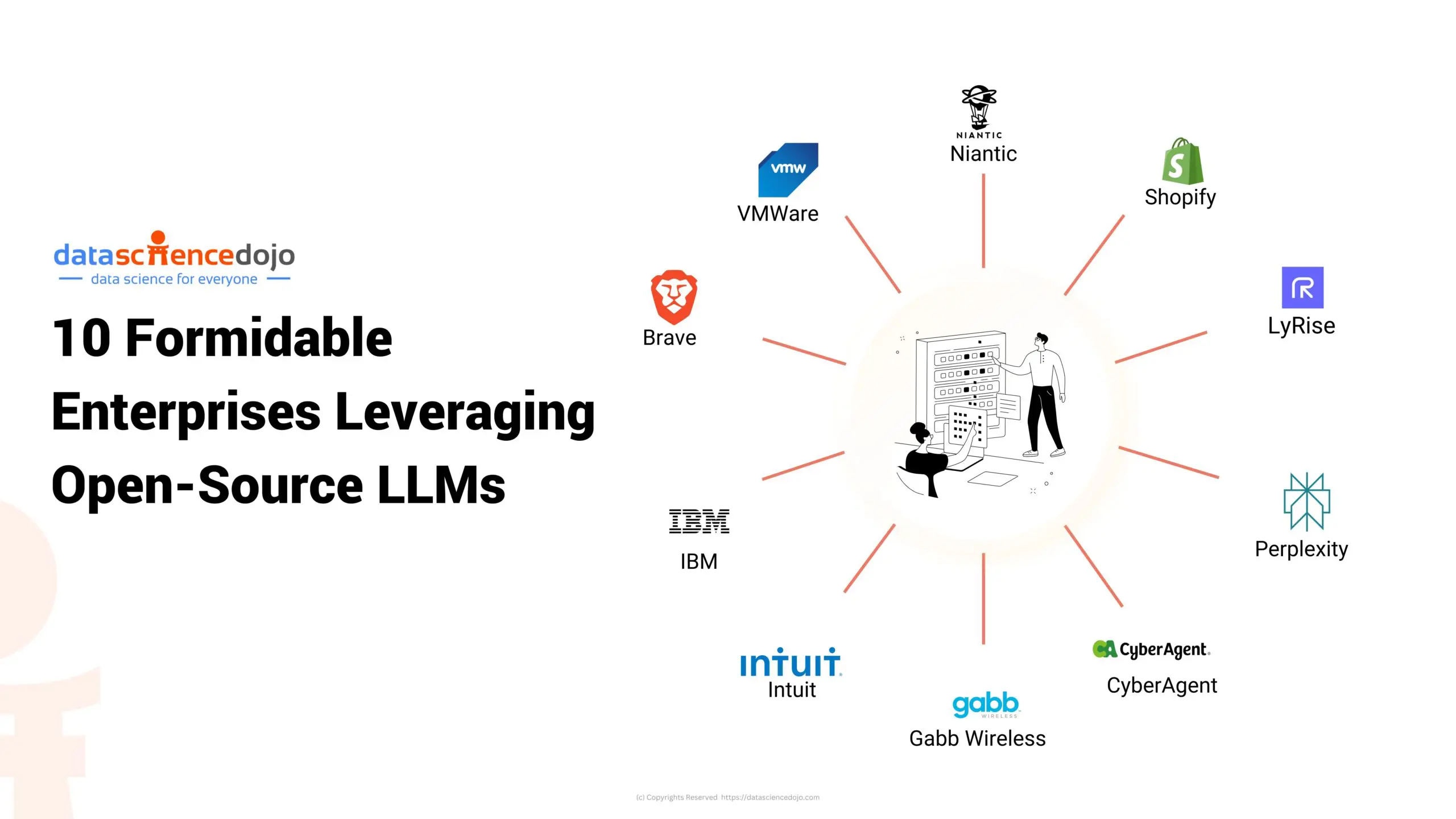
-
VMWare
This strategic move suggests VMware’s priority for internal code security and the desire to host the model on their infrastructure. It contrasts with using an external system like Microsoft-owned GitHub’s Copilot, possibly due to sensitivities around their codebase and not wanting to give Microsoft access to it
-
Brave
Previously, Leo utilized the Llama 2 model, but Brave has since updated the assistant to default to the Mixtral 8x7B model. This move illustrates the company’s commitment to integrating open LLM technologies to maintain user privacy and enhance their browser’s functionality.
-
Gab Wireless
This usage of open language models helps Gab Wireless ensure safety and security in children’s interactions, particularly with individuals they do not know.
-
IBM
- AskHR application: Utilizes IBM's Watson Orchestration and open language models for efficient HR query resolution.
- Consulting advantage tool: Features a "Library of Assistants" powered by IBM's wasonx platform and open-source large language models, aiding consultants.
- Marketing initiatives: Employs an LLM-driven application, integrated with Adobe Firefly, for innovative content and image generation in marketing.
-
Intuit
The company’s approach to building these large language models involves using open-source frameworks, augmented with Intuit’s unique, proprietary data.
-
Shopify
It can generate product descriptions, respond to customer inquiries, and create marketing content, thereby helping merchants save time and streamline their operations.
-
LyRise
-
Niantic
-
Perplexity
- Response generation process:
In a crucial phase of response preparation, specifically the second-to-last step, Perplexity employs its own specially developed open-source language models. These models, which are enhancements of existing frameworks like Mistral and Llama, are tailored to succinctly summarize content relevant to the user’s inquiry.
The fine-tuning of these models is conducted on AWS Bedrock, emphasizing the choice of open models for greater customization and control. This strategy underlines Perplexity’s dedication to refining its technology to produce superior outcomes.
- Partnership and API integration:
-
CyberAgent
Furthermore, a partnership with Dell Technologies has upgraded their server and GPU capabilities, significantly boosting model performance (up to 5.14 times faster), thereby streamlining service updates and enhancements for greater efficiency and cost-effectiveness.
Challenges of Open Source LLMs
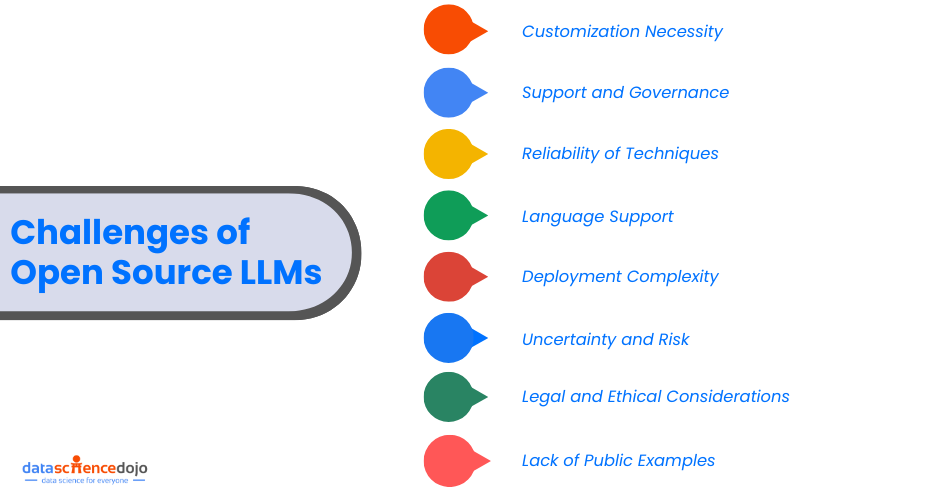
While open LLMs offer numerous benefits, there are substantial challenges that can plague the users.
-
Customization Necessity:
-
Support and Governance:
-
Reliability of Techniques:
-
Language Support:
-
Deployment Complexity:
-
Uncertainty and Risk:
-
Legal and Ethical Considerations:
Discover key insights on data ethics
-
Lack of Public Examples:
Overall, while there are significant potential benefits to using publically available language models in enterprise settings, including cost savings and the flexibility to fine-tune models, addressing these challenges is critical for successful deployment
Open Source LLMs: Driving Flexibility and Innovation
In conclusion, open-source language models represent a pivotal shift towards more accessible, customizable, and cost-effective AI solutions for enterprises. They offer a unique blend of benefits, including significant cost savings, enhanced data control, and the ability to tailor AI tools to specific business needs, while also presenting challenges such as the need for customization and navigating support complexities.Through the collaborative efforts of the global open-source community and the innovative use of these models across various industries, enterprises are finding new ways to leverage AI for growth and efficiency.
However, success in this endeavor requires a strategic approach to overcome inherent challenges, ensuring that businesses can fully harness the potential of publically available LLMs to drive innovation and maintain a competitive edge in the fast-evolving digital landscape.
Want to build AI agents that can reason, plan, and execute autonomously?
Learn more