
Data engineering tools are specialized software applications or frameworks designed to simplify and optimize the process of managing, processing, and transforming large volumes of data. These tools provide data engineers with the necessary capabilities to efficiently extract, transform, and load (ETL) data, build scalable data pipelines, and prepare data for further analysis and consumption by other applications.
By offering a wide range of features, such as data integration, transformation, and quality management, data engineering tools help ensure that data is structured, reliable, and ready for decision-making.
Data engineering tools also enable workflow orchestration, automate tasks, and provide data visualization capabilities, making it easier for teams to manage complex data processes. In today’s data-driven world, these tools are essential for building efficient, effective data pipelines that support business intelligence, analytics, and overall data strategy.
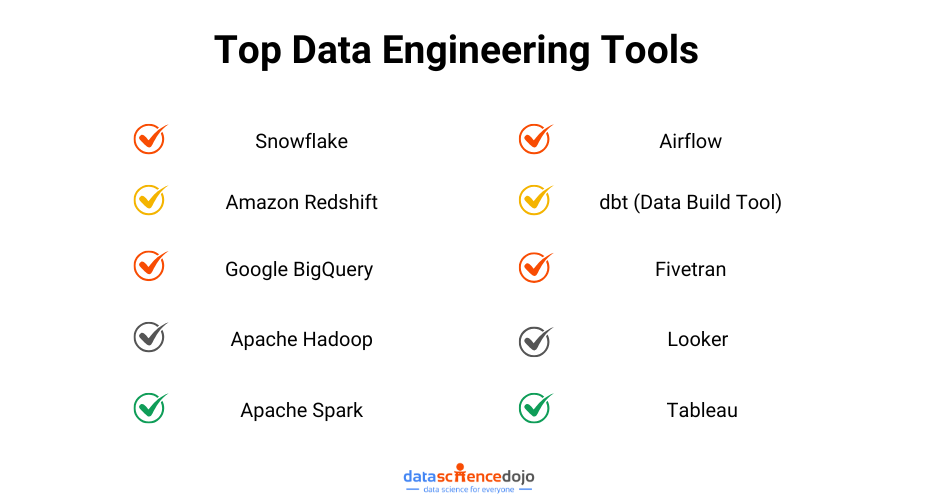
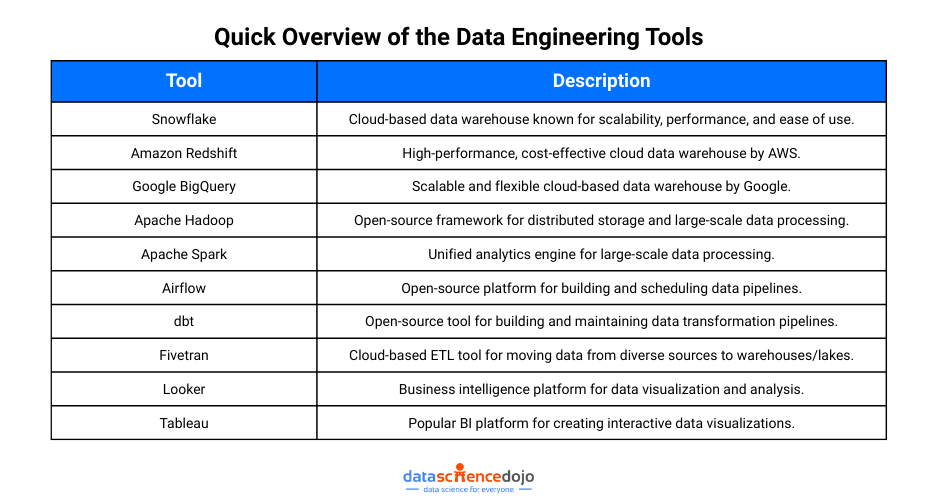
Top 10 data engineering tools

Benefits of Data Engineering Tools
-
Efficient Data Management
Easily extract, consolidate, and store large volumes of data while enhancing data quality, consistency, and accessibility. -
Streamlined Data Transformation
Automate the process of converting raw data into structured, usable formats, applying business logic at scale. -
Workflow Orchestration
Schedule, monitor, and manage data pipelines to ensure seamless and automated data workflows. -
Scalability and Performance
Efficiently process growing data volumes with high-speed performance and resource optimization. -
Seamless Data Integration
Connect diverse data sources—cloud, on-premise, or third-party—with minimal effort and configuration. -
Data Governance and Security
Maintain compliance, enforce access controls, and safeguard sensitive information throughout the data lifecycle. -
Collaborative Workflows
Support teamwork by enabling version control, documentation, and structured project organization across teams.
Wrapping up
Want to build AI agents that can reason, plan, and execute autonomously?
Learn more