
 Building Safe Enterprise AI Systems with Databricks & Gencore AI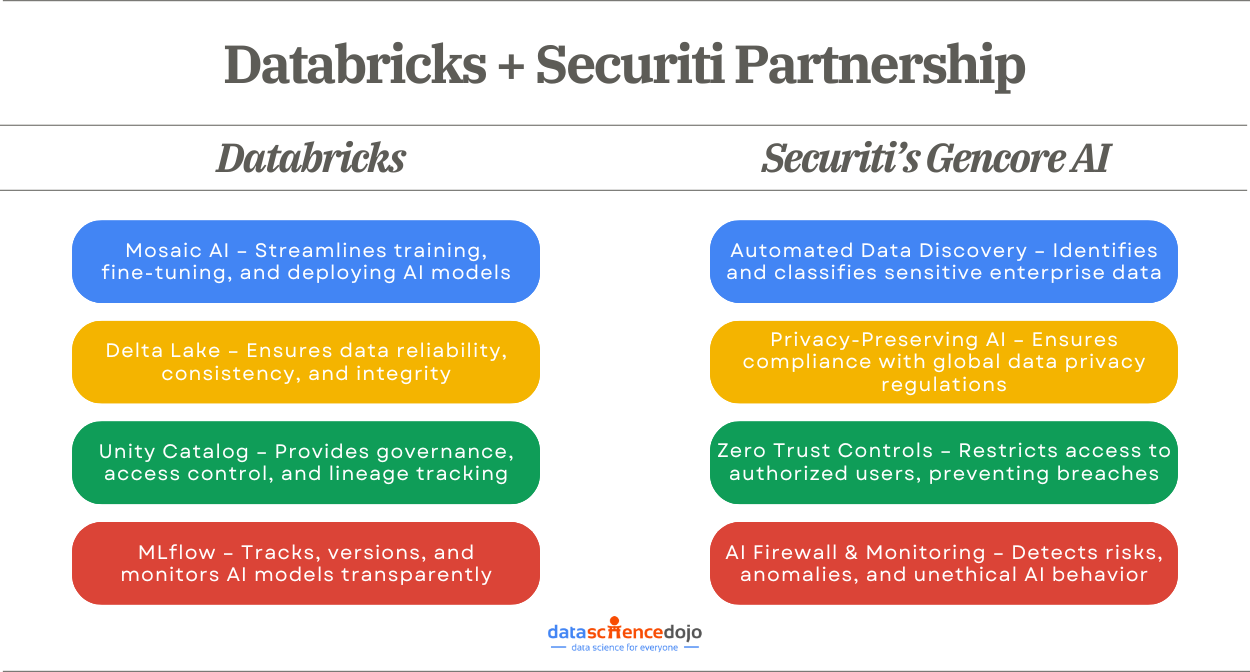
A 5-Step Framework for Secure Enterprise AI Deployment
Building a secure and compliant enterprise AI system requires more than just deploying AI models. A robust infrastructure, strong data governance, and proactive security measures are some key requirements for the process.The combination of Databricks and Securiti’s Gencore AI provides an ideal foundation for enterprises to leverage AI while maintaining control, privacy, and compliance.
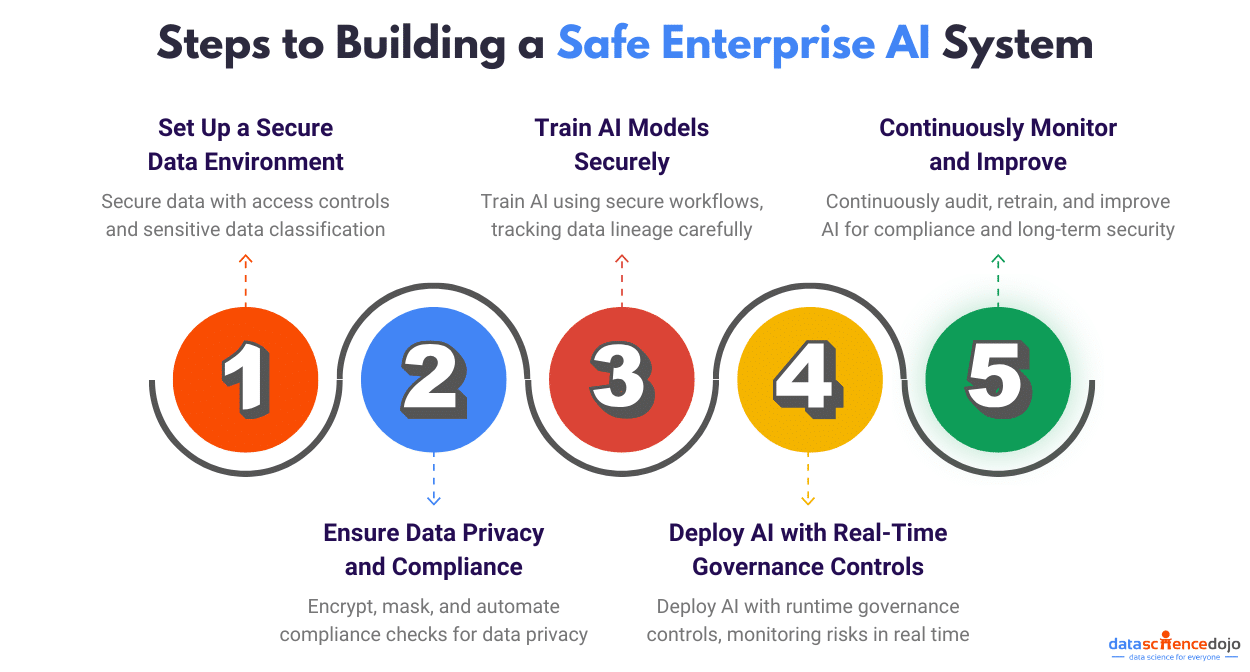 Steps to Building a Safe Enterprise AI System
Below is a structured step-by-step approach to building a safe AI system in Databricks with Securiti’s Gencore AI.
Step 1: Set Up a Secure Data Environment
The environment for your data is a crucial element and must be secured since it can contain sensitive information. Without the right safeguards, enterprises risk data breaches, compliance violations, and unauthorized access.To establish such an environment, you must use Databricks’s Unity Catalog to establish role-based access control (RBAC) and enforce data security policies. It will ensure that only authorized users have access to specific datasets and avoid unintended data exposure.
The other action item at this step is to use Securiti’s Data Discovery & Classification to identify sensitive data before AI model training begins. This will ensure regulatory compliance by identifying data subject to the EU AI Act, NIST AI RMF, GDPR, HIPAA, and CCPA.
Step 2: Ensure Data Privacy and Compliance
Once data is classified and protected, it is important to ensure your AI operations maintain user privacy. AI models should never compromise user privacy or violate regulatory standards. You can establish this by enabling data encryption and masking to protect sensitive information.While data masking will ensure that only anonymized information is used for AI training, you can also use synthetic data to ensure compliance and privacy.
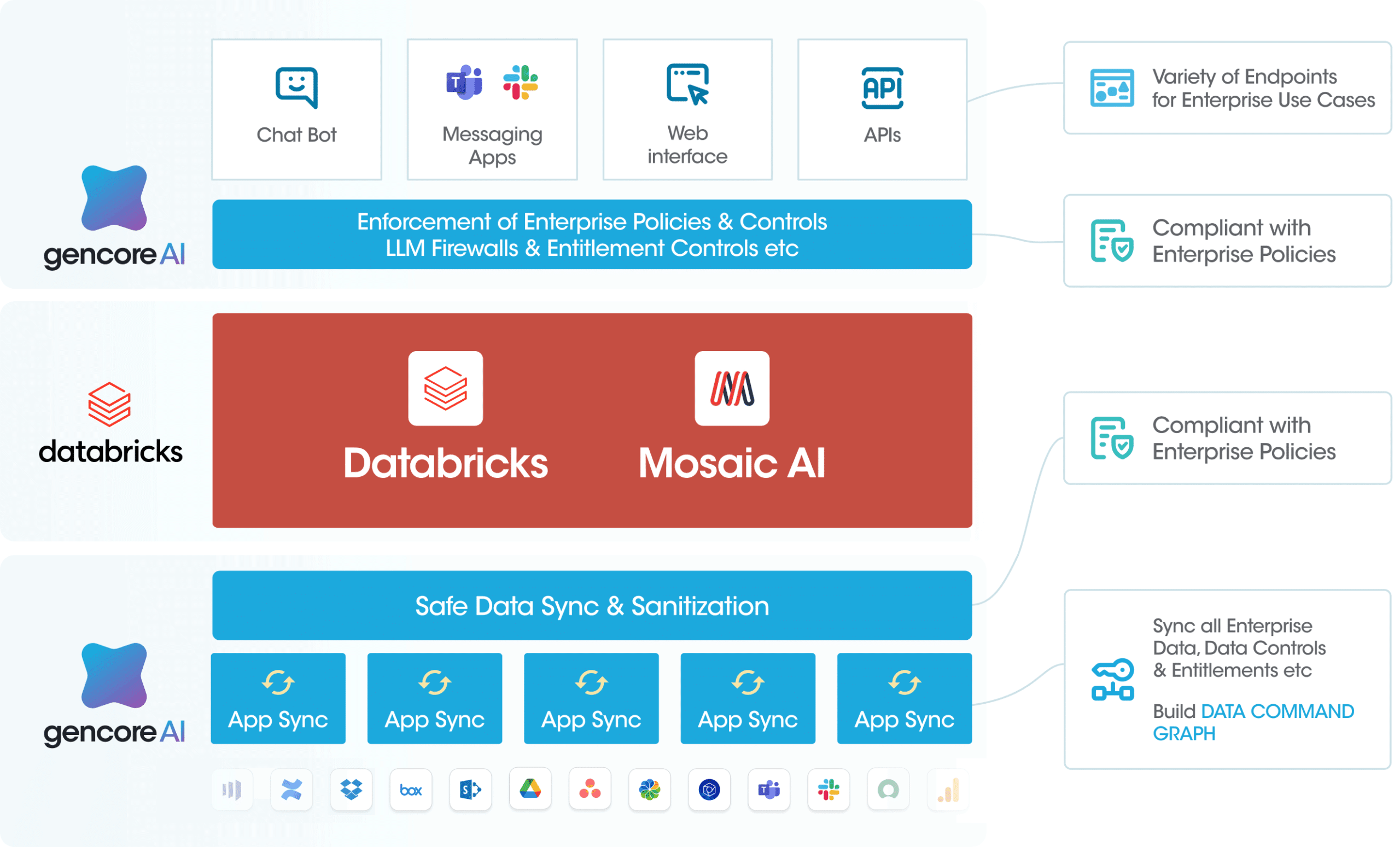
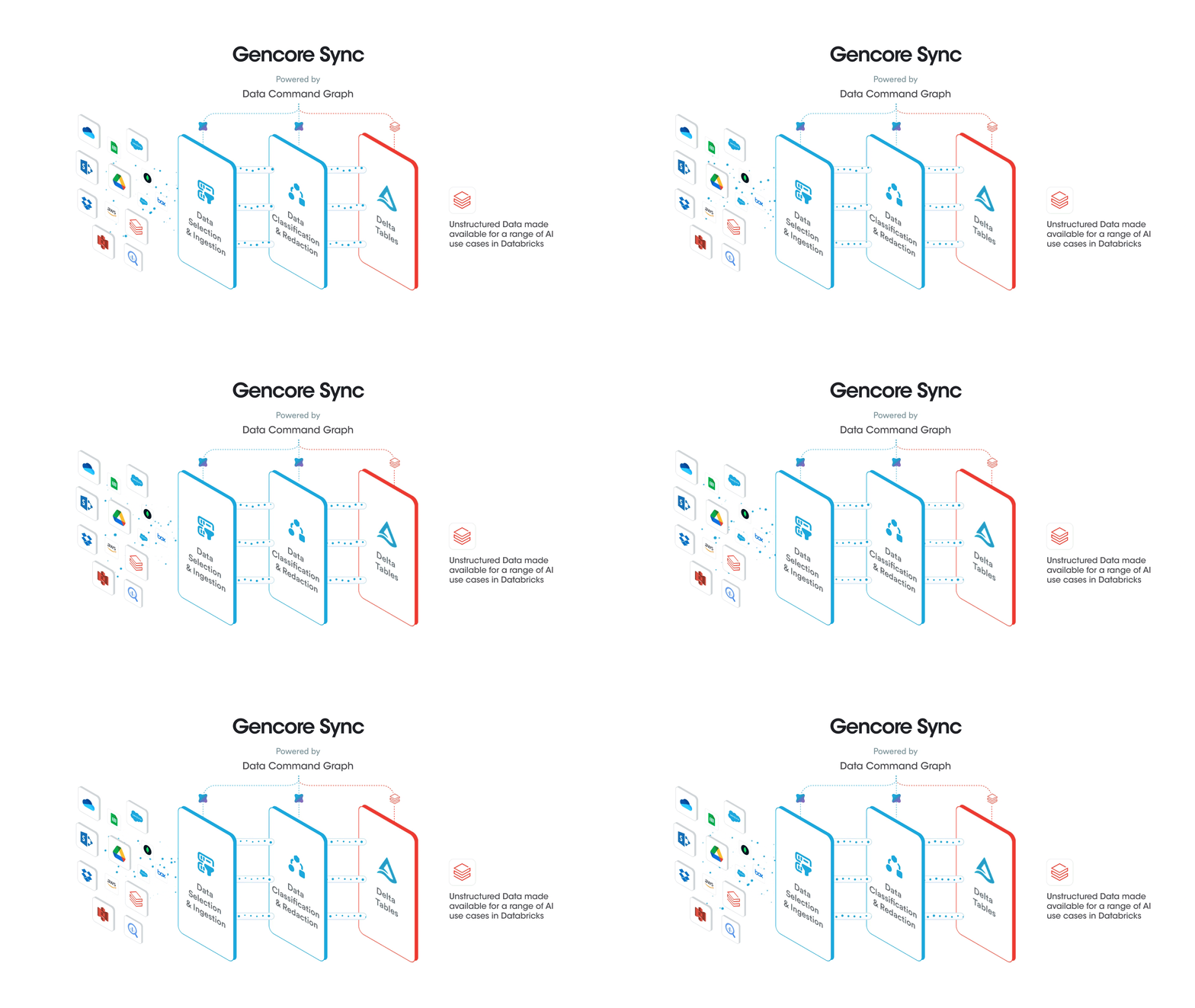 Safely Syncing Unstructured Data to Databricks Delta Tables for Enterprise AI Use Cases
Step 3: Train AI Models Securely
Now that the data environment is secure and compliant, you can focus on training your AI models. However, AI model training must be monitored and controlled to prevent data misuse and security risks. Some key actions you can take for this include:- Leverage Databricks' Mosaic AI for Scalable Model Training - use distributed computing power for efficient training of large-scale models while ensuring cost and performance optimization
- Monitor Data Lineage & Usage with Databricks' Unity Catalog - track data's origin and how it is transformed and used in AI models to ensure only approved datasets are used for training and testing
- Validate Models for Security & Compliance Before Deployment - perform security checks to identify any vulnerabilities and ensure that models conform to corporate AI governance policies
Step 4: Deploy AI with Real-Time Governance Controls
The security threats and challenges do not end with the training and deployment. You must ensure continuous governance and security of your AI models and systems to prevent bias, data leaks, or any unauthorized AI interactions.You can use Securiti’s distributed, context-aware https://securiti.ai/gencore/llm-firewalls/">LLM Firewall to monitor your model’s interactions and detect any unauthorized attempts, adversarial attacks, or security threats. The firewall will also monitor your AI model for hallucinations, bias, and regulatory violations.
Moreover, you must continuously audit your model’s output for accuracy and other ethical regulations. During the audit, you must flag and correct any responses that are inaccurate or unintended.
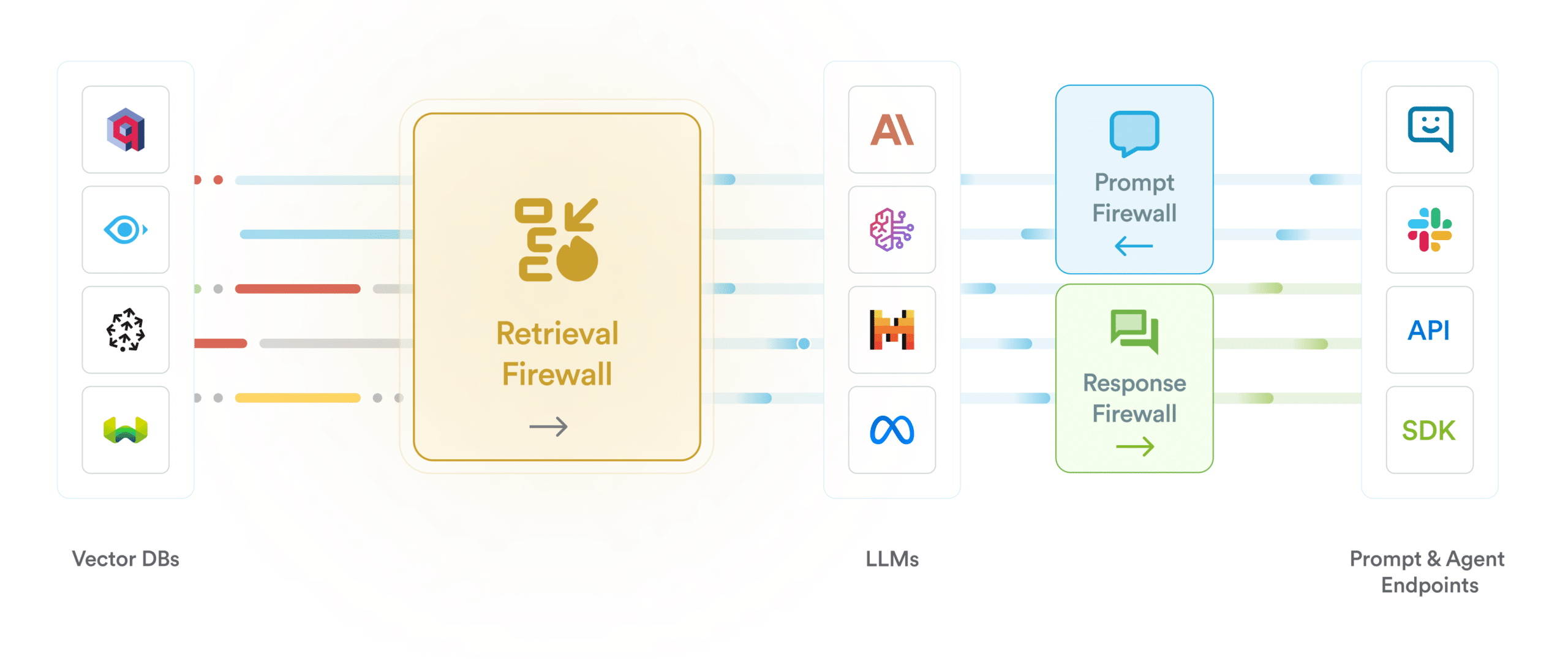 Inspecting and Controlling Prompts, Retrievals, and Responses
You must also implement Databricks’ MLflow for AI model version control and performance monitoring. It will maintain version histories for all the AI models you have deployed, enabling you to continuously track and improve model performance. This real-time monitoring ensures AI systems remain safe and accountable.
Step 5: Continuously Monitor and Improve AI Systems
Deploying and maintaining enterprise AI systems becomes an iterative process once you have set up the basic infrastructure. Continuous efforts are required to monitor and improve the system to maintain top-notch security, accuracy, and compliance.You can do this by:
- Using Securiti's AI Risk Monitoring to detect threats in real-time and proactively address the issues
- Regularly retrain AI models with safe, high-quality, and de-risked datasets
- Conduct periodic AI audits and explainability assessments to ensure ethical AI usage
- Automate compliance checks across AI systems to continuously monitor and enforce compliance with global regulations like the EU AI Act, NIST AI RMF, GDPR, HIPAA, and CCPA.
Read about the key risks associated with LLMs and how to overcome them
Applications to Leverage Gencore AI with Databricks
As AI adoption accelerates, businesses must ensure that their AI-driven applications are powerful, secure, compliant, and transparent. The partnership between Databricks and Gencore AI enables enterprises to develop AI applications with robust security measures, optimized data pipelines, and comprehensive governance.Here’s how businesses can leverage this integration for maximum impact.
1. Personalized AI Applications with Built-in Security
While the adoption of AI has led to the emergence of personalized experiences, users do not want it at the cost of their data security. Databricks’ scalable infrastructure and Gencore AI’s entitlement controls enabled enterprises to build AI applications that tailor user experiences while protecting sensitive data. This can ensure:- Recommendation engines in retail and E-commerce can analyze purchase history and browsing behavior to provide hyper-personalized suggestions while ensuring that customer data remains protected
- AI-driven diagnostics and treatment recommendations can be fine-tuned for individual patients while maintaining strict compliance with HIPAA and other healthcare regulations
- AI-driven wealth management platforms can provide personalized investment strategies while preventing unauthorized access to financial records
Explore personalized text generation with Google AI
2. Optimized Data Pipelines for AI Readiness
AI models are only as good as the data they process. A well-structured data pipeline ensures that AI applications work with clean, reliable, and regulatory-compliant data. The Databricks + Gencore AI integration simplifies this by automating data preparation, cleaning, and governance.- Automated Data Sanitization: AI-driven models must be trained on high-quality and sanitized data that has no sensitive context. This partnership enables businesses to eliminate data inconsistencies, biases, and sensitive data before model training
- Real-time Data Processing: Databricks' powerful infrastructure ensures that enterprises can ingest, process, and analyze vast amounts of structured and unstructured data at scale
- Seamless Integration with Enterprise Systems: Companies can connect disparate unstructured and structured data sources and standardize AI training datasets, improving model accuracy and reliability
 Configuring and Operationalizing Safe AI Systems in Minutes (API-Based)
3. Comprehensive Visibility and Control for AI Governance
Enterprises deploying AI must maintain end-to-end visibility over their AI systems to ensure transparency, fairness, and accountability. The combination of Databricks' governance tools and Gencore AI’s security framework empowers organizations to maintain strict oversight of AI workflows with:- AI Model Explainability: Stakeholders can track AI decision-making processes, ensuring that outputs are fair, unbiased, and aligned with ethical standards
- Regulatory Compliance Monitoring: Businesses can automate compliance checks, ensuring that AI models adhere to global data and AI regulations such as the EU AI Act, NIST AI RMF, GDPR, CCPA, and HIPAA
- Audit Trails & Access Controls: Enterprises gain real-time visibility into who accesses, modifies, or deploys AI models, reducing security risks and unauthorized interventions
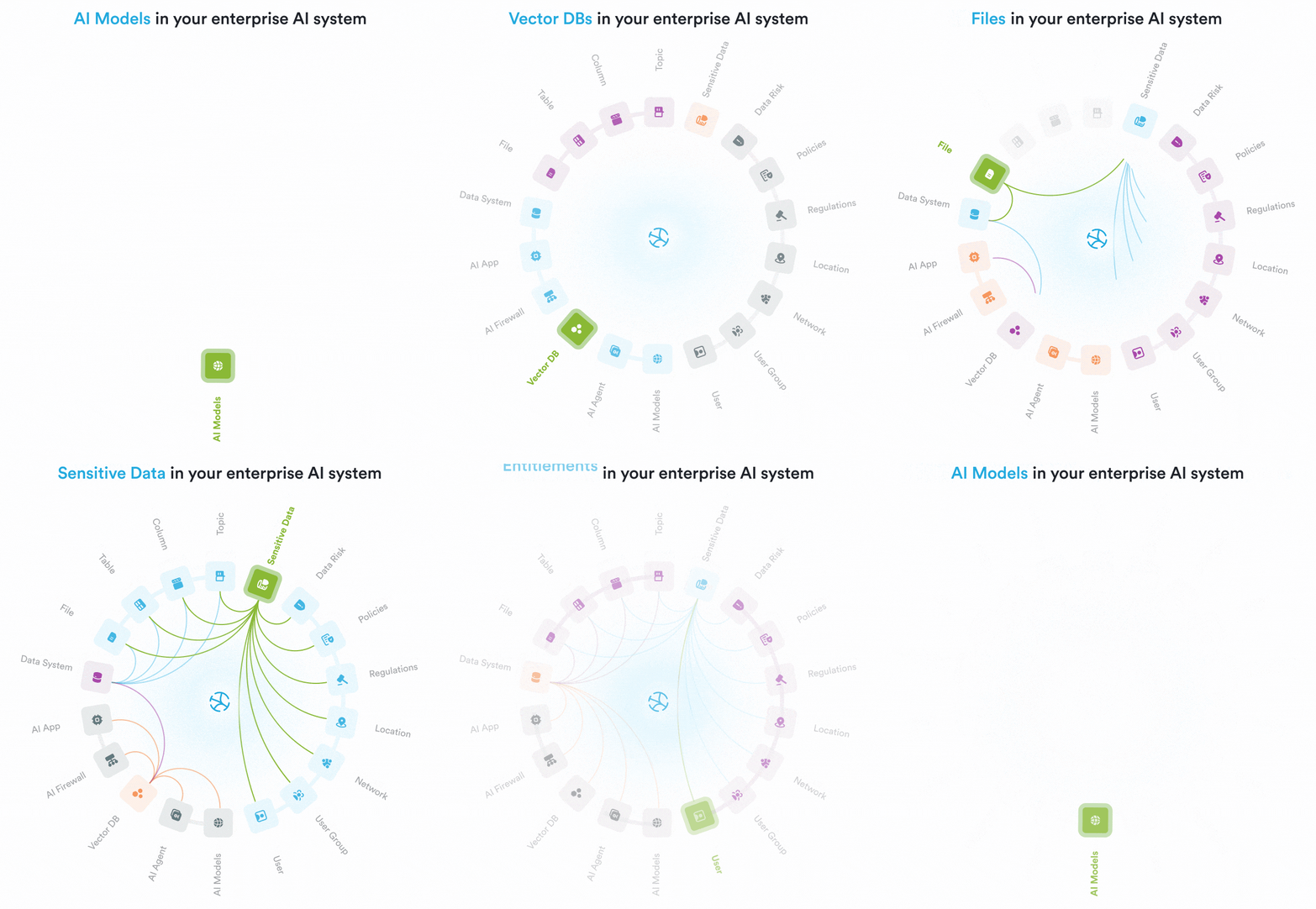 Securiti’s Data Command Graph Provides Embedded Deep Visibility and Provenance for AI Systems
Hence, the synergy between Databricks and Gencore AI provides enterprises with a robust foundation for developing, deploying, and governing AI applications at scale. Organizations can confidently harness the power of AI without exposing themselves to compliance, security, or ethical risks, ensuring it’s built on a foundation of trust, transparency, and control.
The Future of Responsible AI Adoption
AI is no longer a competitive edge, but a business imperative. However, without the right security and governance in place, enterprises risk exposing sensitive data, violating compliance regulations, and deploying untrustworthy AI systems.The partnership between Databricks and Securiti’s Gencore AI provides a blueprint for scalable, secure, and responsible AI adoption. By integrating robust infrastructure with automated compliance controls, businesses can unlock AI’s full potential while ensuring privacy, security, and ethical governance.
Organizations that proactively embed governance into their AI ecosystems will not only mitigate risks but also accelerate innovation with confidence. You can leverage Databricks and Securiti’s Gencore AI solution to build a safe, scalable, and high-performing AI ecosystem that drives business growth.
Learn more: https://securiti.ai/gencore/partners/databricks/ Request a personalized demo: https://securiti.ai/gencore/demo/
You can also view our webinar on building safe enterprise AI systems as you learn more about it.
Want to build AI agents that can reason, plan, and execute autonomously?
Learn more