
For much of the last decade, AI language models have been defined by a simple paradigm: input comes in, text comes out. Users ask questions, models answer. Users request summaries, models comply. That architecture created one of the fastest-adopted technologies in history — but it also created a ceiling.
Something fundamentally new is happening now.
LLMs are no longer just responding. They are beginning to act. They plan, evaluate, self-correct, call tools, browse the web, write code, coordinate with other AI, and make decisions over multiple steps without human intervention. These systems are not just conversational — they are goal-driven.
The industry now has a term for this new paradigm: agentic llm.
In 2025, the distinction between an LLM and an agentic llm is the difference between a calculator and a pilot. One computes. The other navigates.
What Is an Agentic LLM?
An agentic llm is a language model that operates with intent, planning, and action rather than single-turn responses. Instead of generating answers, it generates outcomes. It has the ability to:
- Reason through multi-step problems
- Act using tools, code, browsers, or APIs
- Interact with environments, systems, and other agents
- Evaluate itself and iterate toward better solutions
Agency means autonomy, the system can pursue a goal even when the path isn’t explicit. The user defines the what, while the agent figures out the how.
Discover how goal-driven agents are built and what makes AI truly autonomous.
This shift is seismic. It signals that AI is no longer software you query — it is software you delegate to.
Importantly, agency exists on a spectrum:
| System Type | Behavior |
|---|---|
| Traditional LLM | Answers questions when prompted |
| Assisted LLM | Suggests structured actions but does not execute |
| Semi-Agentic LLM | Uses tools with partial autonomy |
| Agentic LLM | Plans, takes action, evaluates outcomes, self-corrects |
Today’s frontier systems are firmly moving into that final category.
Traditional LLM vs Agentic LLM
For years, we measured AI progress by how convincingly a model could sound intelligent. But intelligence that only speaks without acting is limited to being reactive. Traditional LLMs fall into this category, they are exceptional pattern matchers, but they lack continuity, intention, and agency. They wait for input, generate an answer, then reset. They don’t evolve across interactions, don’t remember outcomes, and don’t take initiative unless instructed explicitly at every step.
The limitations become obvious when tasks require more than a single answer. Ask a traditional model to debug a system, improve through failure, or execute a multi-step plan, and you’ll notice how quickly it collapses into depending on you, the human, to orchestrate every stage. These models are dependent, not autonomous.
An agentic llm, on the other hand, doesn’t just generate responses, it drives outcomes. It can reason through a plan, decide what tools it needs, execute actions, verify results, and adapt if something fails. Rather than being a sophisticated text interface, it becomes an active participant in problem solving.
Key difference in mindset:
- Traditional LLMs optimize for the most convincing next sentence.
- An agentic llm optimizes for the most effective next action.
The contrast in behavior:
| Traditional LLM | Agentic LLM |
|---|---|
| Waits for user instructions | Initiates next steps when given a goal |
| No memory across messages | Maintains state during and across tasks |
| Cannot execute real-world actions | Calls tools, runs code, browses, automates |
| Produces answers | Produces outcomes |
| Needs perfect prompting | Improves via iteration and feedback |
| Reacts | Plans, decides, and acts |
A good way to think about it: traditional LLMs are systems of language, while an agentic llm is a system of behavior.
The Three Pillars That Make an LLM Truly “Agentic”
source: https://arxiv.org/pdf/2503.23037
Agency doesn’t emerge just because a model is large or advanced. It emerges when the model gains three fundamental abilities — and an agentic llm must have all of them.
1. Reasoning — The ability to think before responding
Instead of immediately generating text, an agentic llm evaluates the problem space first. This includes:
-
Breaking tasks into logical steps
-
Exploring multiple possible solutions internally
-
Spotting flaws in its own reasoning
-
Revising its approach before committing to an answer
-
Optimizing the decision path, not just the phrasing
This shift alone changes the user experience dramatically. Instead of a model that reacts, you interact with one that deliberates.
2. Acting — The ability to do, not just describe
Reasoning becomes agency only when paired with execution. A true agentic llm can:
-
Run code and interpret the output
-
Call APIs, trigger automations, or fetch real-time data
-
Write to databases or external memory stores
-
Navigate software interfaces or browsers
-
Modify environments based on goals
In other words, it moves from explaining how to actually doing.
3. Interacting — The ability to collaborate and coordinate
Modern AI doesn’t operate in isolation. The most capable agentic llm systems are designed to participate in multi-agent ecosystems where they can:
-
Share context with other AI agents
-
Divide tasks intelligently
-
Coordinate strategy without human micromanagement
-
Negotiate roles within a workflow
-
Improve collectively through feedback loops
Learn the standards that enable autonomous agents to talk, coordinate and act together.
This is where AI shifts from being a tool to becoming a teammate.
What Has to Exist Under the Hood for an Agentic LLM to Work?
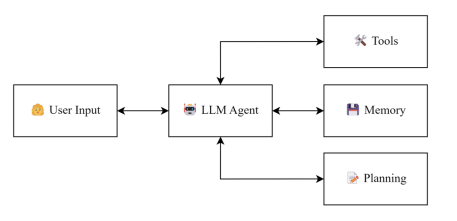
An agentic llm isn’t just a model — it's an architecture. Here’s what enables it:
1. Reasoning engines
These can take the form of internal reasoning abilities or external planning algorithms that help the model evaluate multiple paths before acting.
2. Memory layers
Different types of memory are required, such as:
- Short-term memory for in-task reasoning
- Long-term memory for user preferences, past solutions, or ongoing projects
- Episodic memory for learning from past successes or failures
3. Tool interfaces
An agentic llm must be able to communicate with the outside world via:
- Function calling formats
- API connectors
- Structured tool schemas
- Execution protocols
Learn about how retrieval-augmented generation powers smarter, context-aware agentic systems.
4. Sandboxed execution
Because these models take action, safe environments must exist where they can:
- Run or test code
- Interact with files
- Execute tasks without damaging live systems
5. Feedback loops
To improve over time, an agentic llm needs mechanisms that allow it to:
- Evaluate success vs failure
- Adjust strategies dynamically
- Retain learnings for future tasks
- Minimize repeated mistakes
Together, these components convert a powerful model into an autonomous problem-solving system.
source: Cobius Greyling & AI
From Token Prediction to Decision-Making
Classic LLMs optimize for the most probable next word. Agentic llms optimize for the most probable successful outcome. This makes them fundamentally different species of system.
Instead of asking:
“What is the best next token?”
They implicitly or explicitly answer:
“What sequence of actions maximizes goal success?”
This resembles human cognition:
- System 1: fast, instinctive responses
- System 2: slow, deliberate reasoning
Traditional LLMs approximate System 1. Agentic llms introduce System 2.
Understand how to monitor, evaluate and maintain high-performing agentic LLM applications.
source: https://arxiv.org/pdf/2503.23037
Capabilities That Define Agentic LLMs in 2025
Today’s agentic llm systems can:
- Browse the web and extract structured insights autonomously
- Write, run, and fix code without supervision
- Trigger workflows, fill forms, or navigate software
- Call external services with judgment
- Coordinate multiple AI sub-agents
- Learn from execution failures and retry intelligently
- Generate new data from real interactions
- Improve through simulated self-play or tool feedback
These models are evolving from interactive assistants to autonomous knowledge workers.
Agentic LLMs Currently Available in 2025
As the concept of an agentic llm moves from theory to product, several high-profile models in 2025 demonstrate real-world adoption of reasoning, tool use, memory and agency. Below are some of the leading models, along with their vendor, agentic features and availability.
Claude 4 (Anthropic)
Anthropic’s Claude 4 family—including the Opus and Sonnet variants—was launched in 2025 and explicitly targets agentic use-cases such as tool invocation, file access, extended memory, and long‐horizon reasoning. These models support “computer use” (controlling a virtual screen, exploring software) and improved multi-step workflows, positioning Claude 4 as a full-fledged agentic llm rather than a mere assistant.
Gemini 2.5 (Google / DeepMind)
Google’s Gemini series, particularly the 2.5 update, includes features such as large context windows, native multimodal input (text + image + audio) and integrated tool usage for browser navigation and document manipulation. As such, it qualifies as an agentic llm by virtue of planning, tool invocation and environment interaction.
Llama 4 (Meta)
Meta’s Llama 4 release in 2025 includes versions like “Scout” and “Maverick” that are multimodal and support extremely large context lengths. While more often discussed as a foundation model, Llama 4’s architecture is increasingly used to power agentic workflows (memory + tools + extended context), making it part of the agentic llm category.
Grok 3 (xAI)
xAI’s Grok 3 (and its code-/agent oriented variants) are aimed at interactive, tool-enabled models. With features like DeeperSearch, extended reasoning, large token context windows and integration in Azure/Microsoft ecosystems, Grok 3 is positioned as an agentic llm in practice rather than simply a chat model.
Qwen 3 (Alibaba)
Alibaba’s Qwen series (notably Qwen 3) is open-licensed and supports multimodal input, enhanced reasoning and “thinking” modes. While not always labelled explicitly as an agentic llm by the vendor, its published parameters and tool-use orientation place it in that emerging class.
DeepSeek R1/V3 (DeepSeek)
DeepSeek’s R1 and V3 models (and particularly the reasoning-optimized variants) are designed with agentic capabilities in mind: tool usage, structured output, function-calling, multi-step workflows. Though lesser known compared to the big vendors, they exemplify the agentic llm class in open-weight or semi-open formats.
Dive into an open-source model designed for reasoning, tool-use and agentic workflows.
 source: https://arxiv.org/pdf/2503.23037
Real-World Applications of Agentic LLMs
Software Engineering
-
Multi-agent code generation
-
Self-debugging systems
-
Automated test creation
-
Repository-wide refactoring assistants
Finance
-
Market research agents
-
Portfolio simulation agents
-
Multi-agent trading strategies
-
Automated risk analysis assistants
Healthcare
-
Medical decision workflows
-
Patient record synthesis
-
Drug interaction analysis agents
-
Diagnosis assistance pipelines
Scientific Research
-
Hypothesis generation agents
-
Literature synthesis agents
-
Experiment planning agents
-
AI peer-review collaborators
Enterprise Automation
-
Customer support task orchestration
-
Report generation workflows
-
Internal tool automation
-
AI operations teams coordinating tasks
None of these are single prompts — all are multi-step agentic workflows.
Explore how agentic workflows are transforming analytics and insight-generation.
But More Power Means More Risk
Giving AI the ability to act introduces new safety challenges. The biggest risks include:
| Risk | Mitigation |
|---|---|
| Taking incorrect actions | Validate with external tools or constraints |
| Infinite loops | Step caps + runtime limits |
| Misusing tools | Restricted access + sandboxing |
| Unclear reasoning | Logged decision trails |
| Goal misalignment | Human review checkpoints |
The most effective agentic llm is not the most independent — it is the one that is bounded, observable, and auditable.
The Future: From Copilots to AI Workforces
The trajectory is now clear:
| Era | AI Role |
|---|---|
| 2023 | LLM as chat assistant |
| 2024 | LLM as reasoning engine |
| 2025 | Agentic llm as autonomous worker |
| 2026+ | Multi-agent AI organizations |
In the coming years, we’ll stop prompting single models and start deploying teams of interacting agentic llms that self-organize around goals.
In that world, companies won’t ask:
“Which LLM should we use?”
They’ll ask:
“How many AI agents do we deploy, and how should they collaborate?”
Conclusion — The Age of the Agentic LLM Is Here
The evolution of AI is no longer confined to smarter answers, faster responses, or larger parameter counts — the real transformation is happening at the level of autonomy, decision-making, and execution. For the first time, we are witnessing language models shift from being passive interfaces into active systems that can reason, plan, act, and adapt in pursuit of real objectives. This is what defines an agentic llm, and it marks a fundamental turning point in how humans and machines collaborate.
Traditional LLMs democratized access to knowledge and conversation, but agentic llms are democratizing action. They don’t just interpret instructions — they carry them out. They don’t just answer questions — they solve problems across multiple steps. They don’t just generate text — they interact with systems, trigger workflows, evaluate outcomes, and refine their strategies based on feedback. Most importantly, they shift the burden of orchestration away from the user and onto the system itself, enabling AI to become not just a tool, but a partner in execution.
Yet, power always demands responsibility. As agentic llms become more capable, the need for guardrails, observability, validation layers, and human oversight grows even more critical. The goal is not to build the most autonomous model possible, but the most usefully autonomous one—an agent that can operate independently while remaining aligned, auditable, and safe. The future belongs not to the models that act the fastest, but to the ones that act the most reliably and explainably.
Ready to build robust and scalable LLM Applications?
Explore Data Science Dojo’s LLM Bootcamp and Agentic AI Bootcamp for hands-on training in building production-grade retrieval-augmented and agentic AI systems.
Want to build AI agents that can reason, plan, and execute autonomously?
Learn more